


Bike Going into Winter Storage? Check These 7 Insurance Details First
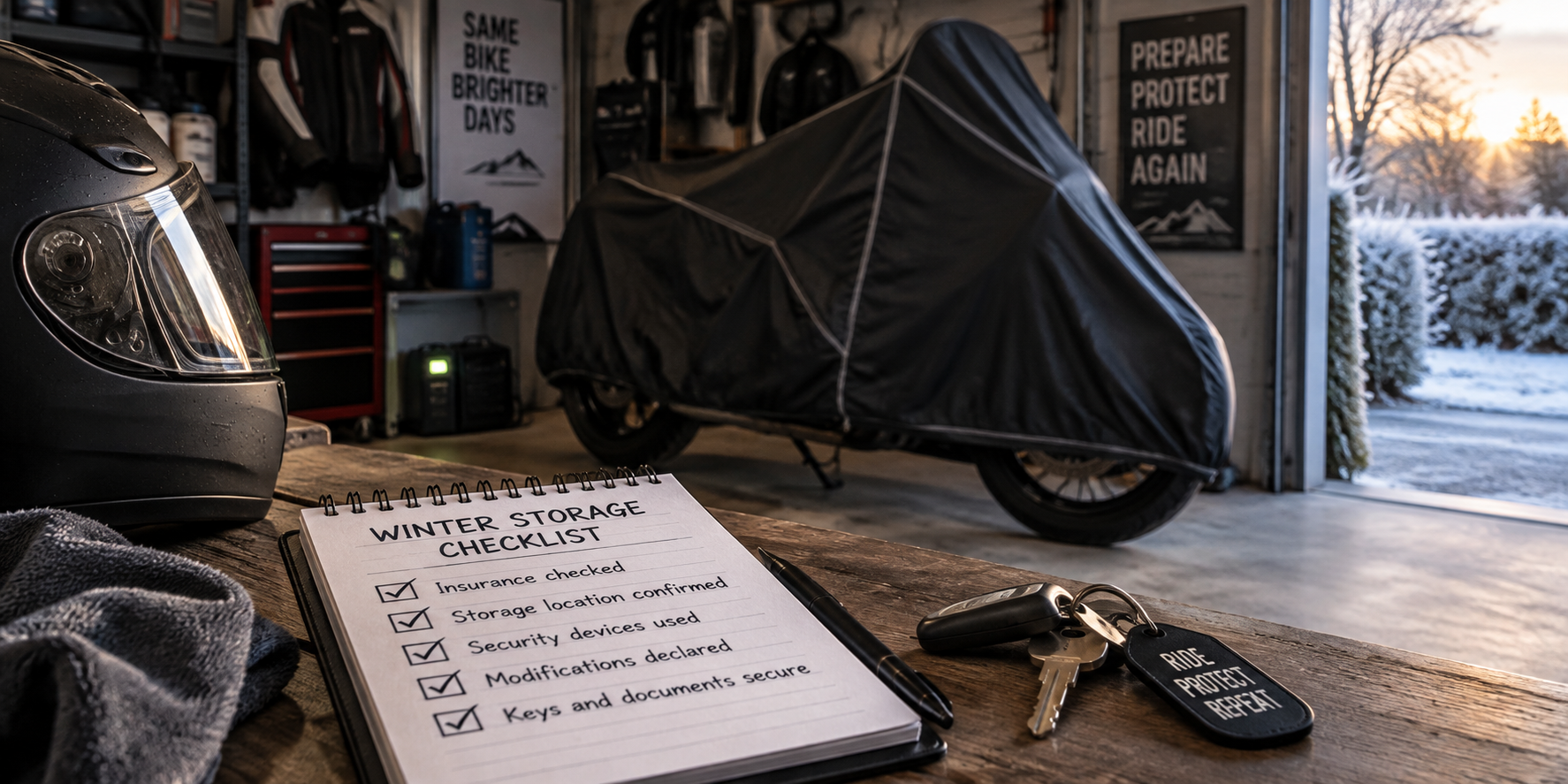
Motorcycle Winter Storage: 7 Insurance Checks Before You Park Up
As autumn arrives, many motorcycle owners start thinking about putting their bikes away until spring.
Cleaning the bike, protecting it from moisture and keeping the battery maintained are often part of the winter routine. But before you lock the garage and put the keys away, there's another important job worth completing: reviewing your motorcycle insurance.
Even when a bike isn't being ridden, it can still be exposed to theft, fire, flooding and accidental damage. And changes to your storage arrangements, security devices or motorcycle specification could affect your insurance.
It's worth checking these details now rather than discovering a problem when you need to make a claim.
At Performance Direct, we arrange specialist motorcycle insurance and understand that storage arrangements and security requirements can vary considerably between motorcycles and policies.
Here are seven important insurance checks to make before putting your bike away for winter.
1. Check that your storage address is correct
Where your motorcycle is normally kept is an important part of the information supplied when arranging insurance.
Your insurer may have recorded that you keep your bike in a locked garage, on a driveway, in a communal car park or on the road outside your home.
But what happens if those arrangements change for winter?
Perhaps you're moving the motorcycle to a relative's garage, renting space at a specialist storage facility or keeping it somewhere different because your usual garage is unavailable.
Even if you believe the new location offers better protection, you shouldn't assume your insurance arrangements will remain unchanged.
The insurer may assess the risk differently depending on where the motorcycle is kept and the security available.
Before moving your bike, contact your insurer or broker to confirm whether the new storage location needs to be recorded.
If you're changing from indoor to outdoor storage, it's particularly important to check whether any additional conditions or changes to your cover apply.
2. Make sure you're using the required security devices
Motorcycle insurance policies can include specific security requirements, particularly for higher-value bikes or vehicles kept in certain locations.
Depending on your policy, these might include an approved motorcycle lock, immobiliser, alarm, tracking device or ground anchor.
However, there's an important distinction between owning the required equipment and using it correctly.
Your policy might specify that a lock must be fitted whenever the motorcycle is unattended, or that a ground anchor must be used even when the bike is inside a locked garage.
A tracking device might need an active subscription, while an alarm must remain operational.
Review the security requirements in your policy schedule and endorsements, paying particular attention to when and where they apply.
What happens if you don't meet a security condition?
Failing to comply with a relevant condition could affect a theft claim, but it doesn't necessarily mean a claim will automatically be rejected.
The Financial Ombudsman Service explains that when reviewing disputes involving motorcycle security conditions, it considers factors including whether the requirements were clearly communicated, whether they were met and whether any failure contributed to the theft.
The outcome will depend on the circumstances and the individual policy terms.
If you're unsure whether your security arrangements meet the requirements, contact your insurer or broker before putting your motorcycle into storage.
3. Don't assume a locked garage meets every insurance requirement
Keeping a motorcycle in a garage can provide protection against theft and the weather, but the type of garage and how it's secured can make a difference.
Insurers may define acceptable garages differently.
For example, a purpose-built, lockable garage might be treated differently from a wooden shed, shared underground car park or temporary structure.
If your policy requires the motorcycle to be garaged, check exactly what the insurer means by that term.
You should also establish when the garaging requirement applies.
Some policies require a motorcycle to be garaged overnight at the insured address, while others impose requirements whenever the motorcycle is at that location and not in use.
The Financial Ombudsman Service identifies garaging requirements as a common feature of motorcycle insurance policies and emphasises the importance of insurers clearly highlighting these conditions.
A locked garage also doesn't necessarily remove the need for other security devices.
If your policy specifies that the bike must be secured with a particular lock or ground anchor, make sure you understand how that condition applies.
Before storing your motorcycle, check:
Whether your garage meets the policy's definition.
When the bike must be kept inside.
Whether additional security devices are required.
Who has access to the garage.
Whether the door and locking mechanisms are in good condition.
If anything has changed since you arranged your insurance, contact your insurer or broker to check whether your details need updating.
4. Think carefully before cancelling your insurance for winter
If you're not planning to ride your motorcycle for several months, cancelling your policy might seem like an opportunity to reduce your costs.
However, being off the road doesn't eliminate the risks your motorcycle faces.
While in storage, it could still be affected by:
Theft or attempted theft.
Vandalism.
Fire.
Flooding or storm damage.
Falling objects.
Accidental damage involving another vehicle.
Whether these events are insured will depend on the cover provided by your policy, together with its terms, conditions and exclusions.
Cancelling your insurance removes the protection provided by that policy.
It could also have implications for your no-claims discount or other benefits, depending on your insurer's arrangements.
Before cancelling or making changes, contact your insurer or broker to understand the consequences.
Do you need to declare your motorcycle SORN?
If you decide to stop insuring and taxing your motorcycle while keeping it off public roads, you'll generally need to make a Statutory Off Road Notification (SORN).
In Great Britain, a vehicle kept off public roads with a valid SORN does not need insurance under the continuous insurance enforcement rules. Northern Ireland has different arrangements.
A motorcycle declared SORN must remain off public roads, subject to limited exceptions such as travelling to or from a pre-booked vehicle test.
A SORN cannot be backdated, and it remains in place until the vehicle is taxed again or another event ends it, such as a sale.
You can check the full requirements in the Government's SORN guidance.
Remember that a SORN is simply a declaration to the DVLA. It is not insurance and provides no financial protection if your motorcycle is stolen or damaged.
5. Check your insurance before making winter modifications
Winter can be an ideal time to work on your motorcycle.
You might be planning to fit a new exhaust, change the suspension, upgrade performance components or add heated grips before the next riding season.
Cosmetic changes are also common, from different handlebars and mirrors to a new paint scheme.
Before making modifications, check your policy requirements and contact your insurer or broker about changes that need to be disclosed.
Don't assume a modification is irrelevant simply because it doesn't improve performance.
Changes can affect a motorcycle's value, desirability or repair costs, and insurers may assess them differently.
The cover available for modified motorcycles will depend on the insurer and the changes involved.
What about accessories?
It's worth checking how your insurance treats additional equipment, too.
Panniers, luggage systems, intercoms and other accessories may have specific limits or exclusions.
Some items might only be covered when permanently fitted, while others may be subject to individual or total claim limits.
Review your policy rather than assuming everything attached to the motorcycle is insured for its full replacement value.
Keep receipts for modifications and accessories, and take photographs showing the bike's condition and equipment.
These can be useful when establishing its specification and value if you subsequently need to make a claim.
6. Keep your keys and documents secure
Even a motorcycle fitted with multiple security devices can be vulnerable if its keys aren't stored carefully.
Keep your main and spare keys away from external doors, windows and other easily accessible places.
If your motorcycle has a keyless ignition system, follow the manufacturer's security guidance and consider appropriate protection against relay theft where relevant.
The Financial Ombudsman Service identifies disputes involving vehicle keys, unattended vehicles and security exclusions among the issues it considers when investigating theft claims.
Check whether your policy contains any specific key-security conditions and make sure you understand them.
Important documents deserve attention as well.
Store your V5C registration document, purchase receipts and security certificates somewhere safe rather than leaving them with the motorcycle.
Keeping these records secure also means they're more readily available if you need them.
7. Arrange regular checks while your motorcycle is in storage
Once your bike is clean, secured and connected to a battery maintainer, it's tempting to leave it untouched until spring.
However, problems can develop while a motorcycle is stationary.
Water might enter the garage, a cover could become loose or a battery charger might fail.
Other potential issues include rodents damaging wiring, a slow puncture leaving the bike resting on a flat tyre or signs of attempted entry going unnoticed.
Check your motorcycle and its storage area periodically throughout winter.
Pay attention to the condition of the bike, its security devices and any equipment that needs to remain operational.
If your motorcycle is kept at another address, agree who will inspect it and how often.
A storage location that was suitable at the start of winter might also change. For example, a garage door could develop a fault or an alarm subscription could expire.
Regular inspections provide an opportunity to identify and address these problems before they become more serious.
Frequently Asked Questions About Motorcycle Winter Storage Insurance
Do I need motorcycle insurance if my bike is stored in a garage?
If your motorcycle is kept off public roads and has a valid SORN, it generally doesn't need insurance under the continuous insurance enforcement rules in Great Britain.
However, a SORN doesn't protect your motorcycle financially.
If you want protection against risks such as theft or fire during storage, check the cover available under your insurance policy.
The level of protection, conditions and exclusions will depend on the insurer.
Will my motorcycle insurance cover theft from a locked garage?
It may, depending on the cover provided and the conditions of your policy.
Some motorcycle insurance policies require a specific type of garage or additional security devices.
If a theft occurs, the insurer may consider whether the garage and security arrangements met the relevant requirements.
Check your policy schedule and endorsements to understand what's required.
Can I cancel my motorcycle insurance for winter?
You can ask to cancel your policy, subject to its terms and any applicable charges, but doing so removes the protection provided by that policy.
Your motorcycle could still be stolen or damaged while it's in storage.
Cancellation may also affect your no-claims discount or other policy benefits.
If you intend to leave the motorcycle uninsured and off public roads, check whether you need to declare it SORN.
Does declaring my motorcycle SORN automatically cancel my insurance?
No. A SORN is a declaration to the DVLA that the vehicle is being kept off public roads.
It doesn't automatically cancel an insurance policy.
If you want to cancel your insurance, you'll need to contact your insurer or broker separately and check the cancellation terms.
You can also have an insured motorcycle that is declared SORN, provided the arrangements meet the relevant requirements.
Do I need to tell my insurer if I move my motorcycle to a different garage?
Check with your insurer or broker before moving the bike.
Your storage address and the type of security available can form part of the information used to assess the risk.
Even a move to a location you consider more secure may need to be recorded.
Your insurer can confirm whether the new arrangements are acceptable and whether any additional conditions apply.
What happens if I don't use the security devices required by my policy?
Failing to meet a relevant security condition could affect a theft claim.
However, the outcome will depend on the circumstances, the policy terms and how the condition was communicated.
The Financial Ombudsman Service considers whether the requirements were clear, whether they were met and whether any failure made a difference to the theft when reviewing relevant complaints.
Check your policy documents before storage and contact your insurer or broker if you're uncertain about any requirements.
Are motorcycle accessories covered while the bike is in storage?
This depends on your policy.
Accessories such as panniers, luggage systems and communication equipment may be subject to specific limits, conditions or exclusions.
Some insurers distinguish between permanently fitted accessories and removable equipment.
Check your documents to establish what's included and whether you need to update your insurer about any changes.
Your Final Motorcycle Winter Storage Insurance Checklist
Before locking up your motorcycle for the season, make sure you've completed these important checks.
Winter storage checklist
Confirm your insurer has the correct storage address.
Check all security conditions and endorsements.
Make sure required locks, alarms and trackers are operational.
Confirm your garage meets the policy requirements.
Review your insurance before cancelling or changing cover.
Check whether you need to declare your motorcycle SORN.
Tell your insurer about modifications that need to be disclosed.
Review accessory cover and relevant limits.
Store keys and important documents securely.
Arrange periodic inspections throughout winter.
Make Your Insurance Part of Your Winter Preparation
Putting your motorcycle away for winter involves more than cleaning it and keeping the battery charged.
Checking your insurance is just as important.
Making sure your storage address is accurate, security requirements are met and any modifications have been disclosed as required can help avoid potential problems if you need to make a claim.
The right arrangements will depend on your motorcycle, your circumstances and the terms of your policy.
If you're unsure whether anything needs updating, contact your insurer or broker before putting the bike away.
A few minutes spent reviewing your insurance now could help prevent complications later.
