


Why Are Modern Cars So Much Larger Than Their Predecessors?
Why Modern Cars Keep Getting Bigger
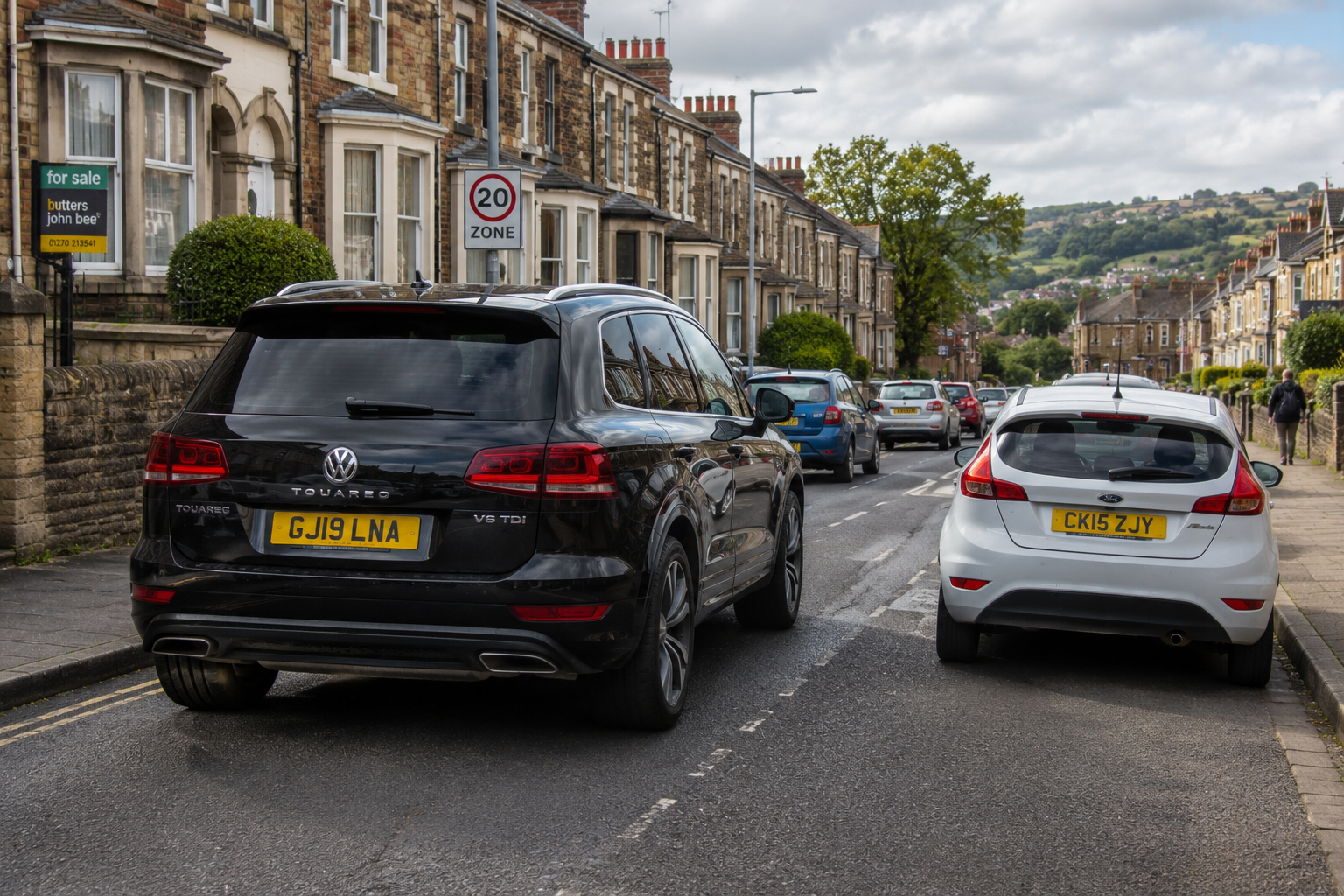
While travelling through Britain's roads today, it's hard not to notice how dominant modern vehicles have become.
Classic cars that once represented the height of family motoring now seem remarkably compact when surrounded by contemporary SUVs and electric vehicles. What was once considered a large estate car often looks narrow, low and lightweight by modern standards.
The contrast raises an interesting question: why have cars grown so dramatically over the past few decades?
The answer involves a mixture of safety, technology, customer expectations and changing trends within the motor industry.
The Mini That Isn't So Mini Anymore
Perhaps no car demonstrates this transformation better than the Mini.
When the original Mini was launched in 1959, its compact design revolutionised small-car packaging. Measuring a little over three metres in length and weighing around 600kg depending on specification, it offered remarkable practicality for its size and quickly became a British icon.
Fast forward to today and the modern MINI Hatch retains many of the styling cues that made the original famous, including its distinctive profile and circular headlights. However, its physical dimensions have increased considerably.
The current model is significantly longer, wider and heavier than its predecessor.
It's not alone.
The modern Fiat 500 has expanded substantially compared with the tiny city car that inspired it. Likewise, the all-electric Renault 5 E-Tech takes styling inspiration from the original Renault 5 while being considerably larger due to modern engineering requirements and battery technology.
Cars Have Expanded in Both Size and Weight
Industry data suggests that many modern family cars are between 15% and 30% larger than comparable models from the 1970s and 1980s.
Weight has risen just as significantly.
A typical family hatchback from the early 1980s might have weighed somewhere between 800kg and 950kg. Today, equivalent vehicles commonly tip the scales at between 1,300kg and 1,700kg.
Electric vehicles can weigh even more due to the size and weight of their battery packs.
To put this into perspective:
An original Mini frequently weighed less than 650kg
A modern MINI Cooper can exceed 1,300kg
A Ford Cortina estate from the 1980s weighed around 1,100kg
Many modern SUVs now weigh more than 1,800kg
The increase affects more than appearance. Additional weight influences braking performance, tyre wear, fuel efficiency and even the long-term condition of road surfaces.
What's Driving the Growth?
There isn't one simple explanation for why cars have become larger.
Instead, a number of factors have contributed to the trend over many years.
Improved Safety Standards
Modern vehicles are dramatically safer than those produced several decades ago.
Features such as reinforced passenger compartments, crumple zones, side-impact protection systems, multiple airbags and sophisticated safety electronics all require additional space and add weight.
Compared with a typical family car from the 1970s, today's vehicles provide a far higher level of occupant protection.
Independent crash-testing programmes such as Euro NCAP have also encouraged manufacturers to continually improve safety performance.
Higher Levels of Comfort
Drivers now expect far more from their vehicles.
Features once considered luxuries are now commonplace, including climate control, touchscreen infotainment systems, electric seats, advanced sound insulation and a growing range of driver-assistance technologies.
Larger seats and increased cabin space have also become priorities for many buyers.
At the same time, the popularity of SUVs and crossovers reflects a preference among some motorists for a higher driving position and easier access.
The Impact of Electric Vehicles
Battery technology presents additional packaging challenges.
Even relatively small electric cars often carry battery packs weighing hundreds of kilograms, requiring stronger structures and clever packaging solutions.
In many cases, manufacturers increase vehicle dimensions to accommodate these batteries efficiently while maintaining passenger and luggage space.
Market Trends and Competition
Over time, manufacturers have gradually increased the size of their model ranges.
A modern supermini now offers interior space that would have rivalled a family hatchback not long ago.
The emergence of crossover vehicles has further blurred traditional market segments, creating demand for larger vehicles that offer the perception of greater practicality and value.
The Unintended Consequence: Parking Problems
While vehicles have grown, much of Britain's parking infrastructure has not.
Many multi-storey car parks and public parking facilities were designed during the 1950s, 1960s and 1970s when vehicles occupied far less space.
As a result, some parking bays remain relatively narrow by modern standards.
According to guidance referenced by the British Parking Association, older parking spaces can still measure around 2.3 metres wide.
By comparison, many modern vehicles approach or exceed two metres in width once door mirrors are taken into account.
It's little wonder that squeezing a large SUV into an older parking bay can feel like a precision exercise.
Modern Bumpers, Hidden Technology and Rising Repair Costs
One interesting development is that modern cars often cope better with minor impacts than their predecessors.
The chrome bumpers fitted to many older vehicles could dent, bend or corrode relatively easily. Modern bumpers typically use flexible materials designed to absorb low-speed impacts and reduce visible damage.
This can be particularly useful in busy car parks where space is limited.
However, modern vehicles also conceal a growing amount of technology behind those body panels.
Parking sensors, radar units, cameras and driver-assistance systems are often mounted within or behind bumpers.
As a result, even a seemingly minor impact can require specialist repairs or recalibration of sensitive electronic equipment.
This is one reason repair costs have increased significantly in recent years and why understanding vehicle technology has become increasingly important when selecting suitable insurance cover.
A Very Different Driving Landscape
Seeing older vehicles on today's roads serves as a reminder of how quickly motoring evolves.
Cars that once seemed large and practical now appear surprisingly modest when compared with modern traffic. Yet despite growing dimensions, many motorists still wish they had more interior space.
Perhaps the biggest irony is that while phones, televisions and countless other technologies have become smaller and slimmer over time, the family car has moved firmly in the opposite direction.
And somewhere in a traditional multi-storey car park, an original Ford Cortina probably still has enough room to open both doors without worrying about the vehicle parked next door.
