What’s a Classic Car? And Why Agreed Value Insurance Matters More Than Ever
Defining a Classic Car in Insurance Terms
The question “What’s a classic car?” is asked more often than you might expect. For owners of older, cherished vehicles, the distinction matters far more than semantics. It determines whether a car qualifies for specialist classic car insurance, whether agreed value protection is available, and ultimately how fairly a claim will be settled.
From an insurance perspective, a classic car is not simply an old car. It is a vehicle that has moved beyond everyday transport and into preservation, collectability, and enthusiast ownership.
What Qualifies as a Classic Car?
While age is an important indicator, it is only the starting point. Many insurers use 15–20 years as a guideline, reflecting HMRC’s own classic vehicle benchmarks.
However, age alone does not automatically qualify a vehicle for classic status.
Core Criteria Insurers Assess
Rarity or limited production
Historical or enthusiast interest
Condition and originality
Ownership intent (preservation vs necessity)
Usage patterns and mileage
A mass-produced saloon that remains in daily use rarely meets these criteria, even if it is technically old.
Why Usage Defines Classic Car Insurance
Classic car insurance is designed for vehicles used sparingly and responsibly. These are cars taken out for pleasure drives, shows, and club events, not school runs or daily commuting.
Lower annual mileage, secure garaging, and seasonal use significantly reduce risk exposure. Claims data consistently shows classic car owners are among the safest drivers on the road, which allows insurers to offer specialist benefits unavailable on standard motor policies.
Agreed Value: The Cornerstone of Classic Cover
Agreed value insurance is the defining feature of specialist classic car cover.
Market Value vs Agreed Value
Standard motor insurance pays out the market value at the time of loss. For classics, this can be deeply misleading. Restoration costs, provenance, and rising collector demand are rarely reflected in trade guides.
Agreed value removes this uncertainty entirely.
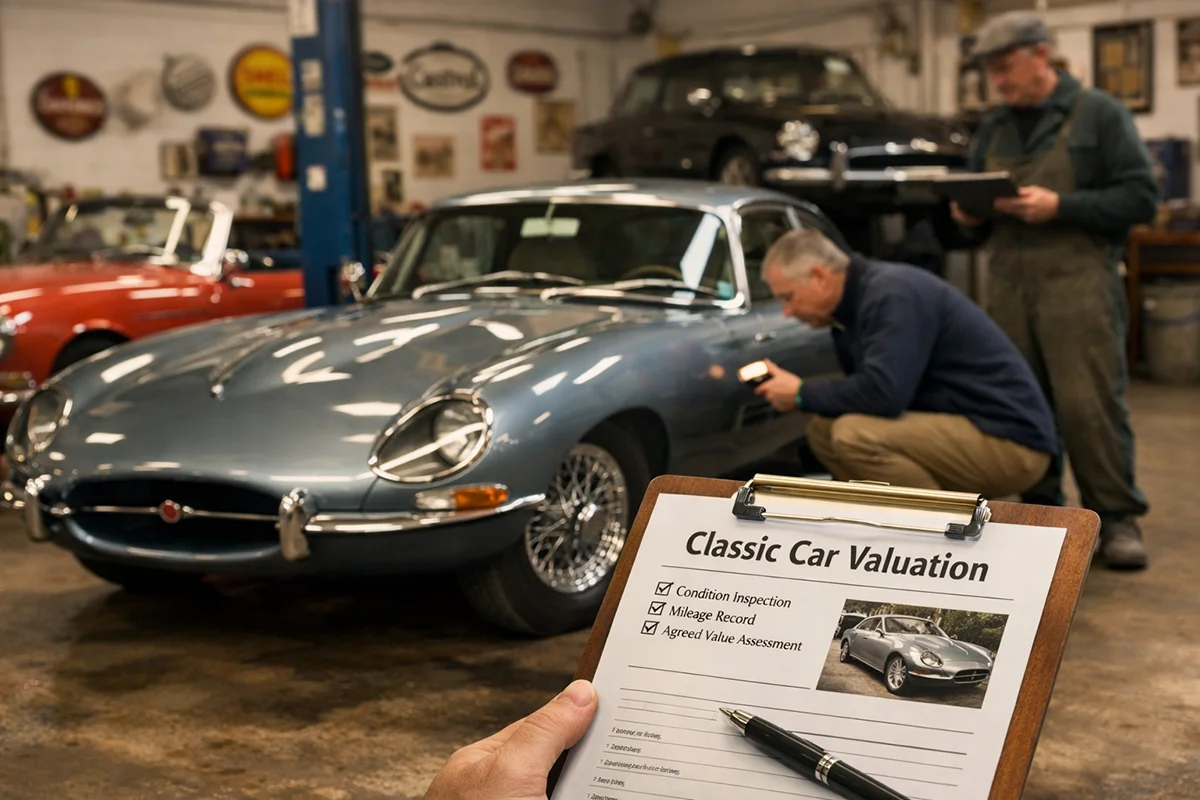
How Agreed Value Works
Owner submits photographs and documentation
Market evidence and condition are assessed
A fixed value is agreed and recorded
That amount is guaranteed in the event of total loss
This ensures your investment, time, and passion are properly recognised.
Why Newer Cars Rarely Qualify
Newer vehicles remain subject to:
Rapid depreciation
High supply availability
Unstable pricing trends
Insurers cannot responsibly offer agreed value protection where future market movements are unpredictable.
Only once depreciation slows and collectability emerges does true classic status become viable.
The Classic Car Owner Risk Profile
Insurers consider the driver as carefully as the vehicle.
Typical classic owners:
Have a separate daily-use vehicle
Maintain detailed service records
Store cars securely
Drive cautiously and infrequently
This behaviour allows insurers to offer:
Classic Car Values in Today’s Market
While speculative investment has softened slightly due to economic pressures, genuine classics remain resilient.
Leading classic car authorities (including Performance Direct Insurance) agree that top-tier classics continue to appreciate where rarity, provenance, and condition align.
Why Specialist Advice Matters
Every classic car is unique. The difference between standard cover and specialist classic insurance can be tens of thousands of pounds at claim stage.
Working with a chartered insurance broker ensures:
When Does a Car Become a Classic?
A car becomes a classic when it is cherished rather than relied upon. Insurance should reflect that transition.
Agreed value protection formalises your vehicle’s status and safeguards its true worth.