What’s a Classic Car?
What makes a Classic Car?
As one of the UK’s leading classic car insurance brokers, we hear the same questions time and again. What is a classic car and can my car be treated as one. Some drivers hope specialist cover might give them a cheaper premium. Others are simply unsure where the boundary sits between an older car and a true classic. The answer lies in how insurers assess age, rarity, and the way the car is used.
Many vehicles now reach the fifteen or twenty year mark which is a common guide used by insurers and follows the HMRC’s own minimum classic car age criteria. But this threshold alone does not guarantee classic status. The car needs a degree of collectability and a pattern of ownership that shows it has moved beyond daily use.
Many newer vehicles miss that mark because they remain part of routine travel, are still depreciating, and are not yet viewed as objects with historical or enthusiast appeal. You might think your 2002 Mazda 6 is ‘a bit of a classic’ on the school run but, well you get the point... and which leads us to:
Usage, which is also central to the decision. Classic cover is aimed at cars driven for pleasure, probably kept in secure storage, and maintained by owners who take pride in them. These are vehicles that are used for runs in fair weather or for club events. They are not expected to face busy commutes (school runs) or year-round mileage.
Once a model reaches the point where it is driven because the owner enjoys it rather than relies on it, the risk profile drops. That creates possibilities for specialist features that standard policies cannot sensibly offer.
Agreed Values
The most important of these features is agreed value – and it is another aspect of classic insurance that makes this cover desirable.
Standard insurance pays out according to market value of the vehicle at the time of a claim. That figure can move, and rapidly. Trade prices for older vehicles often move due to collector interest, scarcity, or restoration trends. Without an agreed value, a total loss could leave the owner with a payout that does not match the actual worth of the car or the time and money invested in its upkeep.
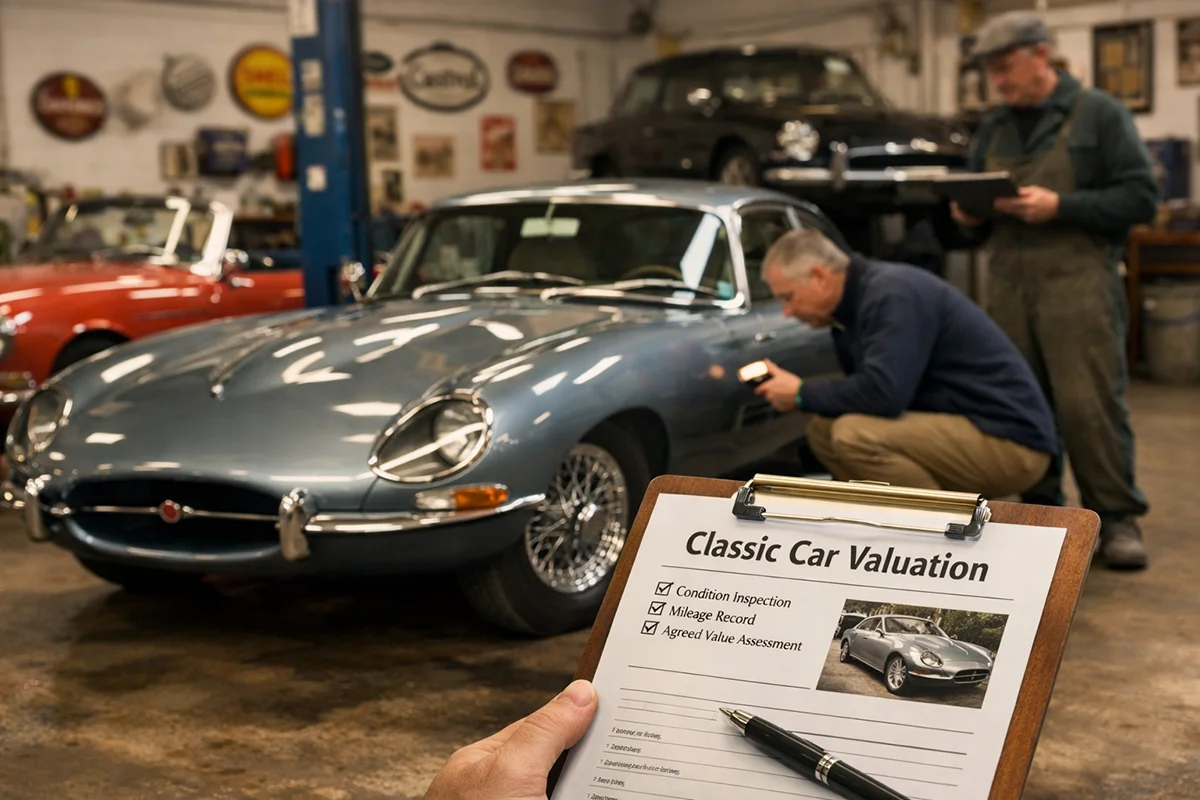
Agreed value removes that uncertainty. It involves the insurer and owner working together to assess the car, using photographs, service records, and evidence of recent sales. Once both parties then confirm the figure and it becomes the guaranteed amount paid if the vehicle is stolen or written off.
This gives classic owners protection that mirrors their effort. It recognises the car and its value as something preserved, not simply valued by the day’s trade guides. Insurers only offer this when the market is stable enough to support a clear valuation, which is why newer cars rarely qualify. Their pricing remains in flux, shaped by depreciation and ready supply.
Finally, in terms of classic car insurance, there’s the driver.
The ideal classic customer behaves very differently from the average driver. They store their vehicle with care, keep mileage low, and usually have another car for daily use. Claims data across the industry supports this pattern. These drivers generate far fewer incidents, which allows insurers to shape flexible policies with features like laid-up cover or enhanced protection for rare parts. Premiums often come in below standard motor rates, though exact figures vary widely between models, ages and driver history.
The wider market continues to evolve. Recent analysis showed a mild dip in global collector values as higher interest rates cooled speculative buying. Even so the finest examples, such as the 1971 Lamborghini Miura SV, have risen strongly. That model gained more than 30 percent in value over the past year. It shows that scarcity and story still carry weight, even when the broader market pauses.
Classic cars are greatly loved in UK, and enthusiasm remains high. But, as will have become clear, age alone does not define a classic.
Care, rarity, and purpose also shape the decision. A vehicle becomes a classic when it is cherished and preserved rather than simply old. Agreed value then locks in that status by giving the owner confidence that the car’s true worth will be recognised.
So while model models may reach this point in time, they must first leave their working life behind and step into the classic world of care, love and preservation.