


Does MoT Exemption Affect Classic Car Insurance?
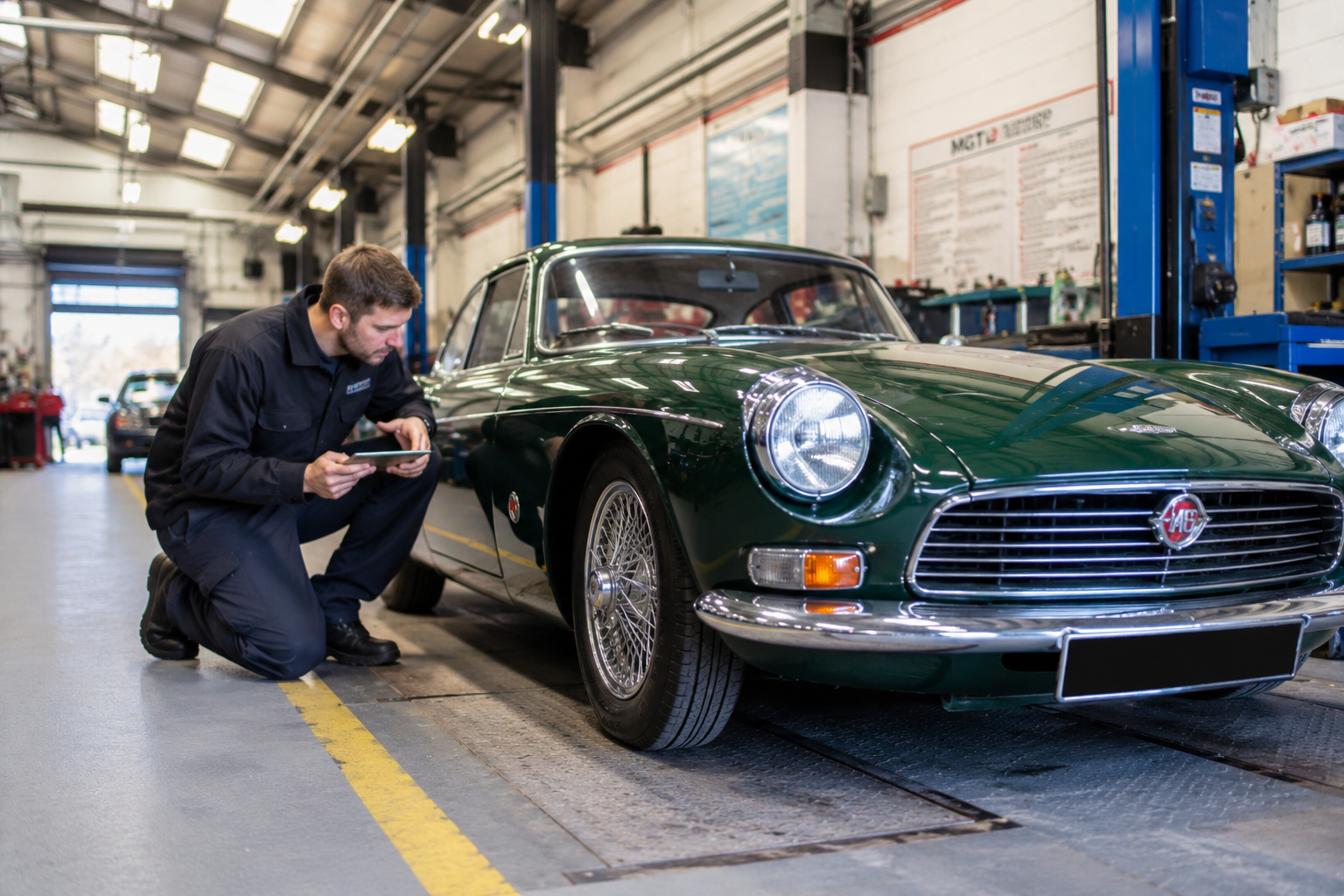
MoT Exemption and Classic Car Insurance: What Owners Need to Know
MoT exemption remains a topic that raises important questions among classic vehicle owners. Many enthusiasts understandably want clarity on whether not having a current MoT certificate could affect their insurance cover, agreed valuation, or the handling of a future claim.
At Performance Direct, we understand how important it is for owners to protect both their vehicles and the considerable time, care, and investment that often goes into maintaining them. Fortunately, qualifying for MoT exemption does not invalidate insurance cover, provided the vehicle is maintained in a roadworthy condition and complies with legal requirements.
Why certain historic vehicles no longer require an MoT
The UK’s rolling 40-year MoT exemption for historic vehicles was introduced in 2018 following extensive consultation with organisations representing the classic vehicle sector, including the Federation of British Historic Vehicle Clubs.
Many historic vehicles are used only occasionally, carefully maintained, and driven by enthusiasts who take preservation seriously. Older vehicles can also present practical challenges within a modern MoT testing framework. Features found on some classics — particularly pre-war vehicles — such as trafficator indicators, cable-operated braking systems, or fly-off handbrakes are not always easily accommodated within standardised testing procedures.
Vehicles over 40 years old may qualify for exemption if they have not undergone substantial modification during the previous 30 years. Owners must register the vehicle as a Vehicle of Historic Interest and remain responsible for ensuring it is roadworthy whenever used on public roads.
The exemption reflects the understanding that historic vehicles are generally not used as everyday transport and are often maintained to exceptionally high standards.
Does MoT exemption affect insurance cover?
The most important consideration for insurers is not whether a vehicle has an MoT certificate, but whether it is roadworthy.
An MoT confirms that a vehicle met the required legal standard at the time of testing. It does not guarantee the vehicle will remain roadworthy indefinitely. Equally, a vehicle without an MoT certificate is not automatically unsafe.
If a classic vehicle legitimately qualifies for MoT exemption and is maintained properly, the absence of a current MoT certificate does not invalidate insurance cover.
The key requirement remains consistent: the vehicle must always be safe and fit for use on the road.
Will MoT exemption affect an agreed value policy?
Owners sometimes worry that not having an MoT certificate could influence an agreed value assessment.
In practice, agreed value is typically based on factors such as condition, rarity, originality, provenance, restoration quality, and current market demand. Supporting evidence may include photographs, specialist valuations, documentation, and owners’ club verification.
Whether the vehicle has undergone an MoT test generally does not affect agreed value. Market value is determined by the vehicle itself rather than the presence of a test certificate.
Can a claim be rejected because the vehicle has no MoT?
Some owners are concerned that insurers could use the absence of an MoT certificate as grounds to refuse a claim. In reality, this situation is uncommon.
Under UK law, insurers remain responsible for meeting third-party liabilities regardless of MoT status.
In certain circumstances, policy terms may allow insurers to reduce or refuse part of a settlement if a vehicle is proven to have been unroadworthy and that defect directly caused or contributed to the incident. However, this would generally require clear evidence linking a known mechanical issue to the accident itself — something that is relatively unusual within the historic vehicle sector.
Owners who maintain their vehicles properly and use them responsibly are unlikely to encounter problems purely because the vehicle is MoT exempt.
Why many owners still choose voluntary MoT testing
Although exempt vehicles are not legally required to undergo annual testing, many enthusiasts still choose to arrange voluntary MoT inspections or specialist servicing.
Routine inspections can help identify gradual wear and tear that may otherwise go unnoticed. Common issues identified during testing often include:
ageing or cracked tyres
brake wear or imbalance
lighting faults or poor headlamp alignment
deteriorating suspension components
worn wiper blades or reduced visibility
These types of issues often develop slowly over time rather than appearing suddenly.
Many classic car owners value the reassurance that an independent inspection can provide. Voluntary testing may also help maintain high safety standards across the historic vehicle community more broadly.
Supporting classic vehicle enthusiasts
At Performance Direct, we recognise the dedication that goes into preserving and maintaining historic vehicles. In our experience, classic car owners are typically highly conscientious when it comes to vehicle care, maintenance, and responsible use.
MoT exemption does not automatically affect insurance cover, agreed value, or the validity of a claim. The central responsibility remains the same for every vehicle owner: ensuring the vehicle is kept roadworthy and properly maintained.
For many enthusiasts, voluntary inspections and regular servicing continue to provide valuable peace of mind while helping preserve these vehicles for future generations to enjoy.
